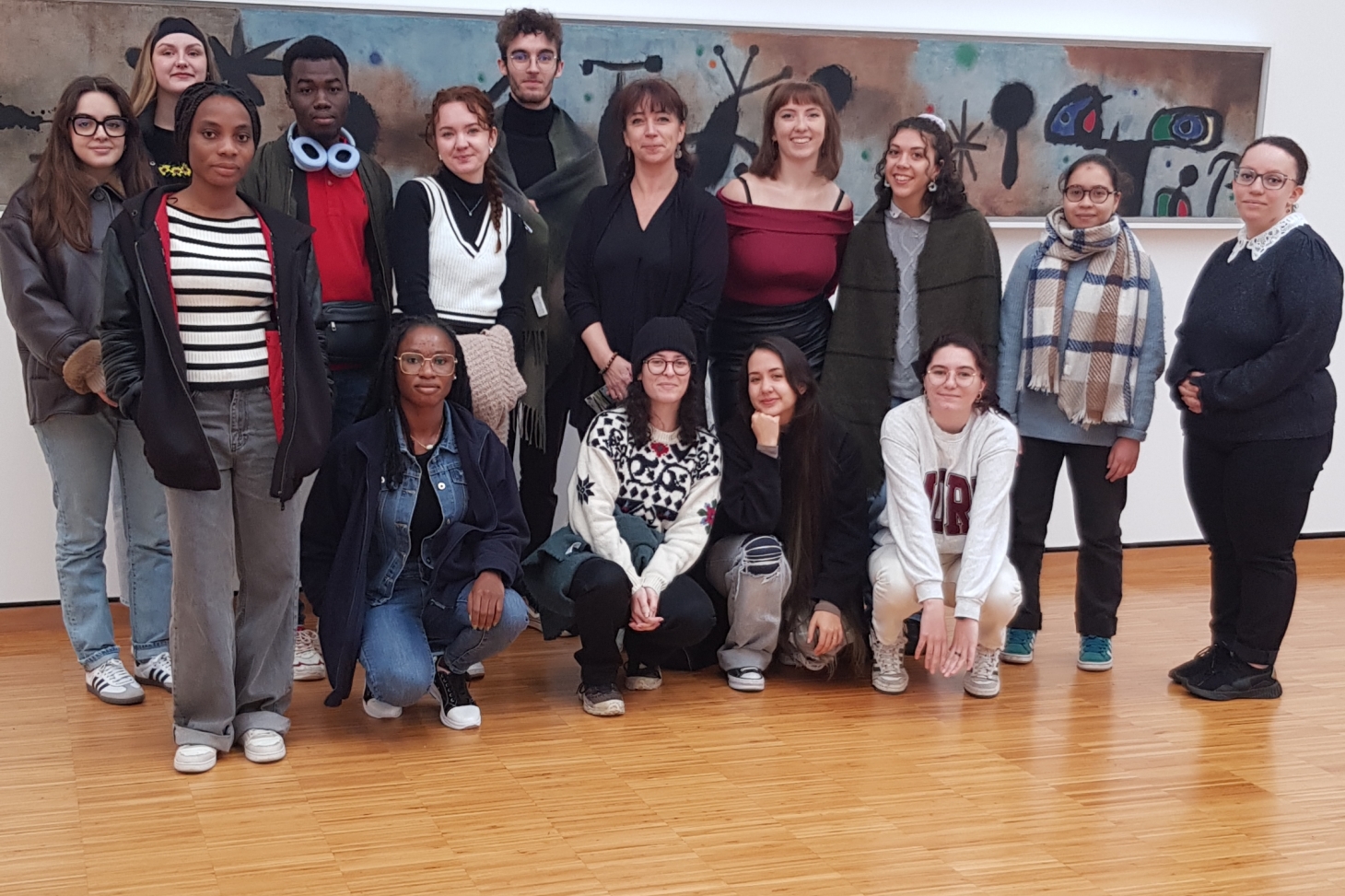
Educational visit to the Grenoble Museum for L3 LLCER students
As part of the "XXth-XXIst Century Spanish Painting" course".
Culture
L3 LLCER students - Field trip to the Grenoble Museum
Commented course in Spanish: innovations and experimentation in art (20th and 21st centuries) - Spanish LLCER L3S5
As part of the Spanish painting XXth-XXIst centuries "At the end of the semester, an educational visit to the Grenoble Museum was organized for students in the Licence 3 LLCER Espagnol program.
Led by teacher Marion Le Corre-Carrasco (PR), this outing aimed to consolidate the theoretical knowledge covered during seven lecture sessions, while offering students an immersive and enriching experience in an emblematic local cultural space.
Pedagogical objectives
The visit was part of a pedagogical approach combining theory and practice. The aim was to enable students to come into direct contact with the works of art, and to mobilize their academic knowledge to analyze and comment on the paintings. in situand broaden their understanding of modern European art. In addition to the Spanish themes explored during the semester, students also discovered works by major artists such as Matisse, Braque, Kandinsky and Modigliani. This exposure to other figures of modern art was designed to enrich their general iconographic culture and stimulate their critical faculties in the face of transnational artistic dialogues.
Tour schedule
Guided by their teacher, the students explored the museum's permanent collections, particularly those highlighting twentieth-century art. The focus was on works by Spanish artists, notably Picasso and Miró, in direct echo of the course syllabus. Students were invited to describe, analyze and comment on the paintings, in Spanish, putting into practice the concepts and methodologies studied in class: composition, color, form, symbolism and socio-historical context.
At the same time, works by major European painters such as Matisse, Braque, Kandinsky and Modigliani were used to introduce stylistic and thematic comparisons, revealing cultural influences and interactions within the European avant-garde. This approach has fostered a cross-disciplinary understanding of modern artistic movements.
Pedagogical interest and cultural openness
The experience highlighted the value of linking university teaching with local cultural institutions. The partnership with the Musée de Grenoble enabled us to enhance the value of our artistic heritage, while anchoring students in an active process of discovery and analysis. The outing also fostered a better grasp of theoretical knowledge, reinforcing students' ability to formulate critical observations and express themselves on works of art in context.
Finally, opening up to non-Hispanic artists has broadened students' perspectives, inviting them to situate Spanish artistic production within a wider European dynamic. This approach contributes to training enlightened citizens, capable of apprehending art in its global and intercultural dimensions.
Conclusion
The visit to the Musée de Grenoble represented a key moment in the academic career of the L3 LLCER Spanish students. Combining theory and direct observation, as well as linguistic practice in real-life situations, it provided a bridge between university teaching and general pictorial culture, while highlighting the richness of local museum collections. This experience, appreciated by both students and teacher, is a successful example of collaboration between the academic world and cultural institutions.
Share linkCopyCopyClose modal windowShare this page URLI recommend this page:Available at this address :The page will then be accessible from your "My favorites" menu.Stop videoPlay videoMute soundPlay soundChat: Got a question?Chatbot Robo FabricaMatomo visitor statisticsX (formerly Twitter)

 Societies, Cultures and Modern Languages