Mourning and remembering political violence in the contemporary Basque Country
Culture, Research
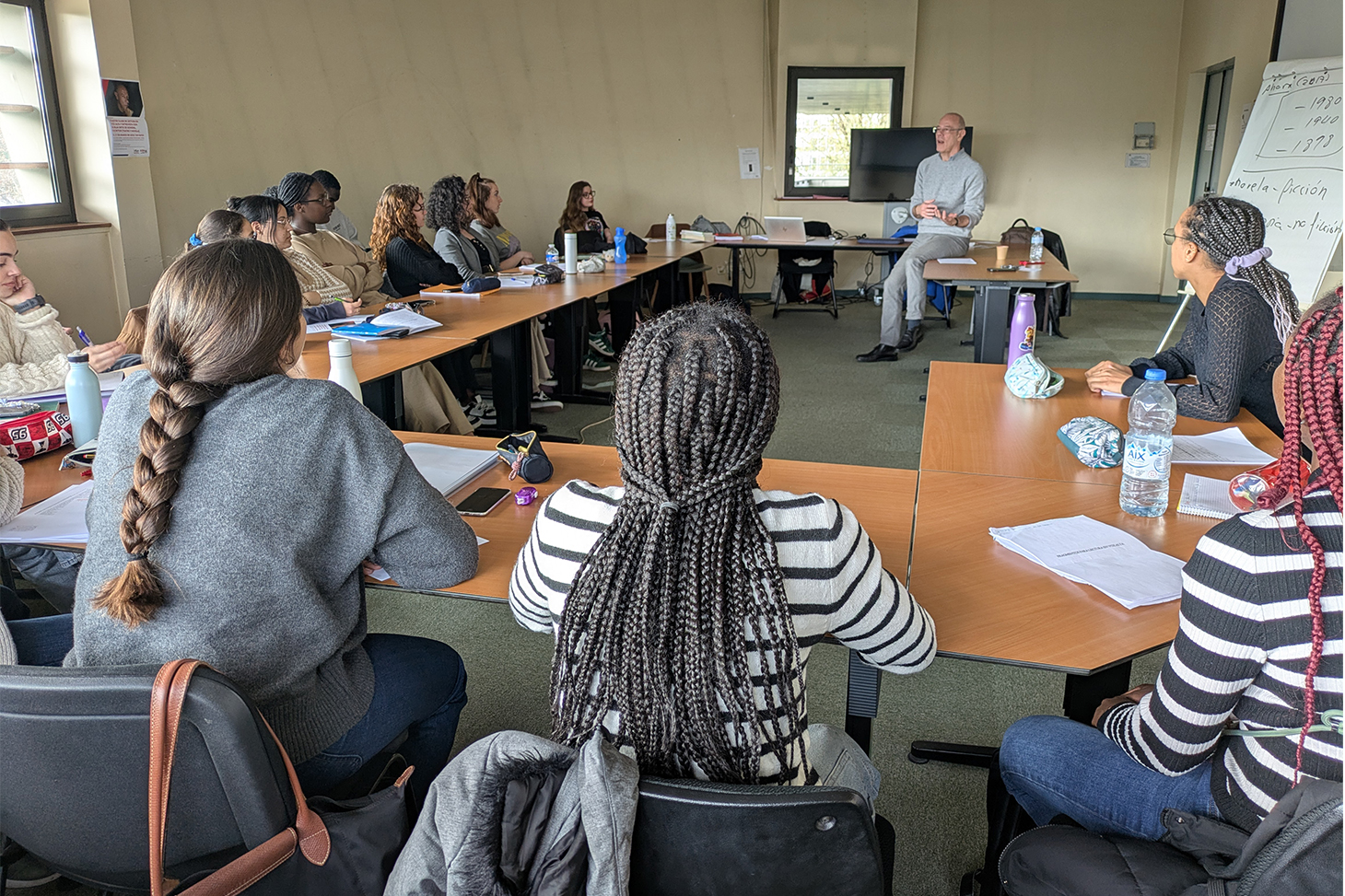
The class of L3 LLCER Espagnol and double Licence English-Spanish students took part in a series of scientific events devoted to "Mourning and the memory of political violence in the contemporary Basque Country", using a pedagogical approach centered on training for research through research, and on artistic practice as an alternative approach to texts.
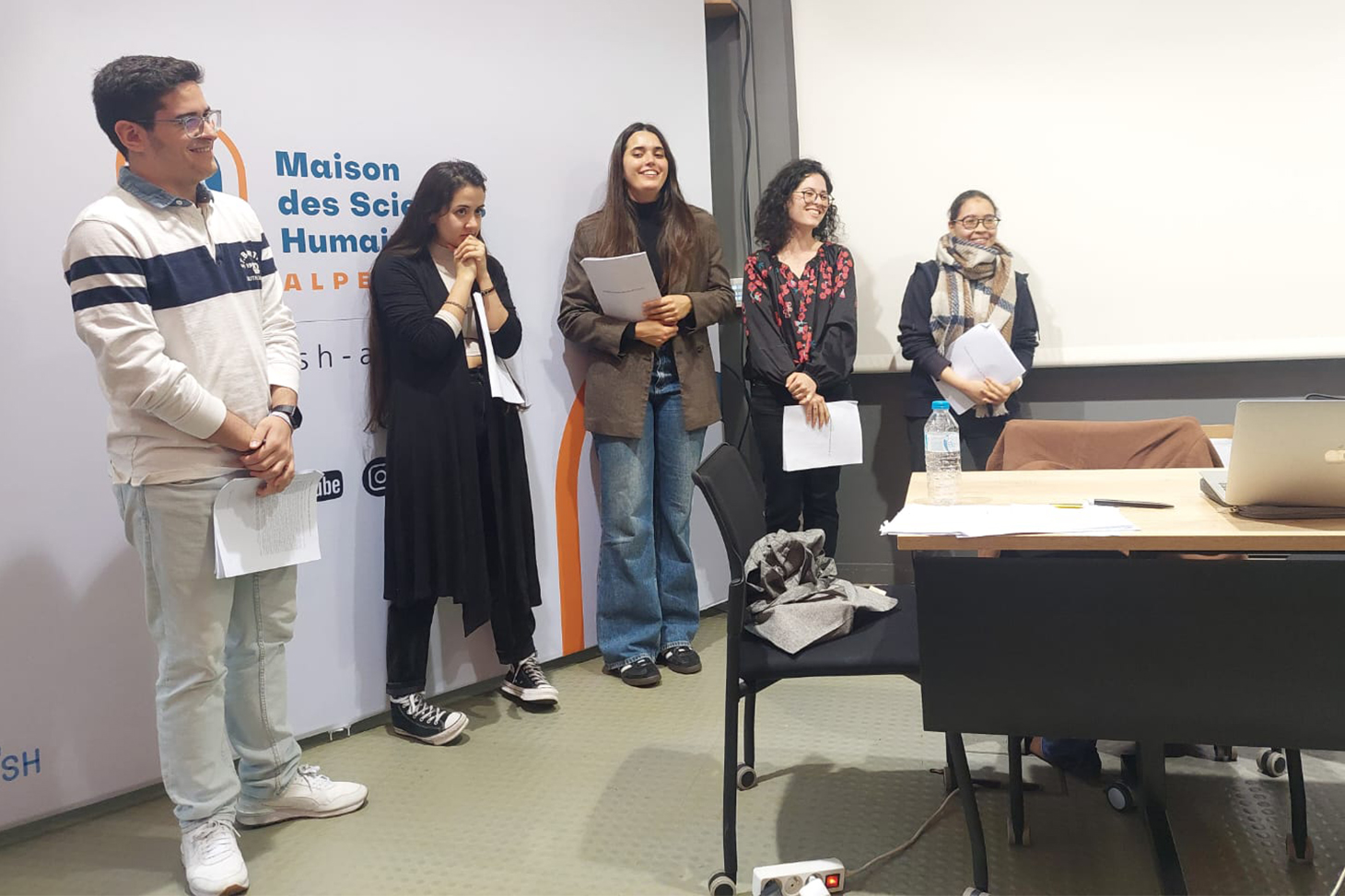
Based on Borja Ortiz de Gondra's theatrical trilogy Los Gondra (2021), studied in "Culture and Creation" (S5) and then, thanks to "Rhetoric and Argumentation" (S6), several exercises were carried out on March 27 and 28: the interview, the bio-bibliographical presentation and the public reading.
The apprenticeship also included participation in a seminar session at the Centre d'Études et de Recherche des Hispanistes (CERHIS), during which Basque historian and academic Santiago de Pablo discussed the creation of the Basque nationalist community (19th-20th centuries) as part of the Centre's unifying theme: "Pluralities, communities and diversity: creating society in the Hispanic world from the Middle Ages to the present day".
The apprenticeship also included participation in a seminar session at the Centre d'Études et de Recherche des Hispanistes (CERHIS), during which Basque historian and academic Santiago de Pablo discussed the creation of the Basque nationalist community (19th-20th centuries) as part of the Centre's unifying theme: "Pluralities, communities and diversity: creating society in the Hispanic world from the Middle Ages to the present day".
The two organizing teachers, David Crémaux-Bouche and Laurence Garino-Abel, had three main objectives:
Putting students in a position to take action, to become aware of and use the skills they have acquired throughout their Bachelor's degree (knowledge, know-how, interpersonal skills, tools).
Training in different mediation formats for a variety of audiences.
Exploit interdisciplinarity in a project at the crossroads of history, literature and the arts.
Pedagogically, the major challenge is the active and innovative transmission of knowledge, notably through artistic practice. The approach also provides training in collaborative work and its cardinal values (listening, mutual aid, benevolence). Last but not least, the public dimension of the final product enhances self-confidence and self-esteem.
From a citizen's point of view, mourning and remembering the terrorist violence in the Basque Country raises questions for all of us about the individual and collective legacy of trauma, between forgetting, guilt and resilience.
Scientifically, the project required crossing approaches (academics specializing in literature and/or civilization, filmmakers, playwrights and actors, historians) on a painful and unresolved subject in contemporary Spain and the Basque Country. The co-presence of Spanish (Basque and non-Basque) and French participants, some of whom lived during the period of ETA's armed activity, fueled the dialogue.
Share linkCopyCopyClose modal windowShare this page URLI recommend this page:Available at this address :The page will then be accessible from your "My favorites" menu.Stop videoPlay videoMute soundPlay soundChat: Got a question?Chatbot Robo FabricaMatomo visitor statisticsX (formerly Twitter)

 Societies, Cultures and Modern Languages